North Hollywood · Apartment E3 Inspections
North Hollywood Balcony and E3 Inspections for Apartment Buildings
RetroCal inspects balconies, exterior walkways, stairs, landings, railings, structural connections, and associated waterproofing on qualifying North Hollywood apartment properties. Each inspection is documented in a signed report with photographs, findings, and clear next steps.
Apartment buildings only—RetroCal does not provide inspections for HOA or condominium properties.

Does your North Hollywood apartment have qualifying E3 elements?
This tool provides general screening only. The property and applicable requirements must be reviewed individually.
One inspection file for the building you actually manage
North Hollywood apartment properties may contain many different combinations of elevated construction. Each type present at a property is inventoried and sampled separately, rather than treating the whole building as one generic “balcony inspection.” These conditions do not exist at every North Hollywood property — the inventory is built from what is actually there.
- Exterior-access walkways
- Cantilevered balconies
- Elevated stairs
- Shared landings
- Walkway bridges
- Balconies above parking or landscaped areas
- Coated deck surfaces
- Stucco-enclosed framing
- Metal guardrails attached to wood-supported assemblies
Jurisdiction note
North Hollywood is within the City of Los Angeles. Apartment owners may encounter E3 requirements through the Los Angeles Housing Department E3 requirements, while permitted corrective work is coordinated through the applicable City of Los Angeles building process. RetroCal serves North Hollywood from its Sherman Oaks office — see how RetroCal inspections work.
What RetroCal looks at — from railing to ledger
1. Guardrail and post attachment
Post bases, through-bolts, and welds are checked for movement, corrosion, and whether the attachment reaches sound framing.
Educational illustration — not a construction or repair detail.
Inspection methods
- Direct visual evaluation
- Moisture meters
- Infrared thermal imaging where conditions allow
- Borescopes or endoscopes
- Targeted openings when concealed conditions cannot otherwise be evaluated reliably
These tools are used to gather better information and to minimize unnecessary openings. They do not mean concealed conditions can always be determined without opening the assembly; where a condition cannot be evaluated reliably, the report says so and recommends further investigation.
Text alternative — diagram callouts
- 1. Guardrail and post attachment
- Post bases, through-bolts, and welds are checked for movement, corrosion, and whether the attachment reaches sound framing.
- 2. Walking surface
- Surface slope, cracking, soft spots, and deflection under load are noted across the whole walking area.
- 3. Pli-Dek or other deck coating
- Coating wear, blisters, exposed reinforcing mesh, and patch history indicate how much protection remains.
- 4. Waterproofing membrane
- The membrane below the coating is evaluated where it is visible or where moisture readings suggest failure.
- 5. Flashing and wall transition
- The joint where the deck meets the wall is a common water entry point; flashing laps and terminations are examined.
- 6. Drainage edge
- Edge metal, scuppers, and drip conditions are checked for backed-up water and staining below.
- 7. Joists and supporting framing
- Framing is checked for decay, insect damage, splitting, and prior repairs, using probing where warranted.
- 8. Ledger or wall connection
- The ledger is a critical load path; fastener condition and evidence of concealed water are prioritized.
- 9. Beam or post support
- Beams and posts are checked at bearing points and at grade or deck contact where moisture collects.
- 10. Soffit or underside
- Staining, rust bleed, sagging, and separation on the underside often reveal conditions hidden above.
- 11. Fasteners and connection hardware
- Hangers, bolts, screws, and clips are inspected for corrosion, missing hardware, and incorrect substitutions.
- 12. Areas where deterioration may appear
- Transitions, penetrations, and low points are documented because they concentrate water and movement.
A report organized for decisions — not a vague punch list
Clear enough for an owner. Detailed enough for a contractor.
- Building identifier
- Building C
- E3 type
- Exterior walkway
- Specific location
- Second floor, units 14–17
- Photograph
- Referenced photo, numbered to the finding
- Observed condition
- Coating worn through at the wall transition with staining below
- Why it matters
- Water reaching framing at a connection reduces the load path over time
- Severity
- Repair Required
- Recommended action
- Remove coating locally, evaluate framing, reflash and recoat
- Further investigation
- Open a limited area at the ledger if moisture readings remain elevated
Descriptive grading scale
- Immediate HazardAction now
- Repair RequiredNon-emergency corrective work
- Recommended WorkAdvised protection or maintenance
- CosmeticMonitor
- ExcellentNo work required
This is RetroCal’s reporting and communication framework. It does not replace the signing inspector’s professional findings or agency requirements.
See the full Los Angeles E3 inspection processWhat the inspection covers
Every photograph below is RetroCal work, labeled with its actual project city.
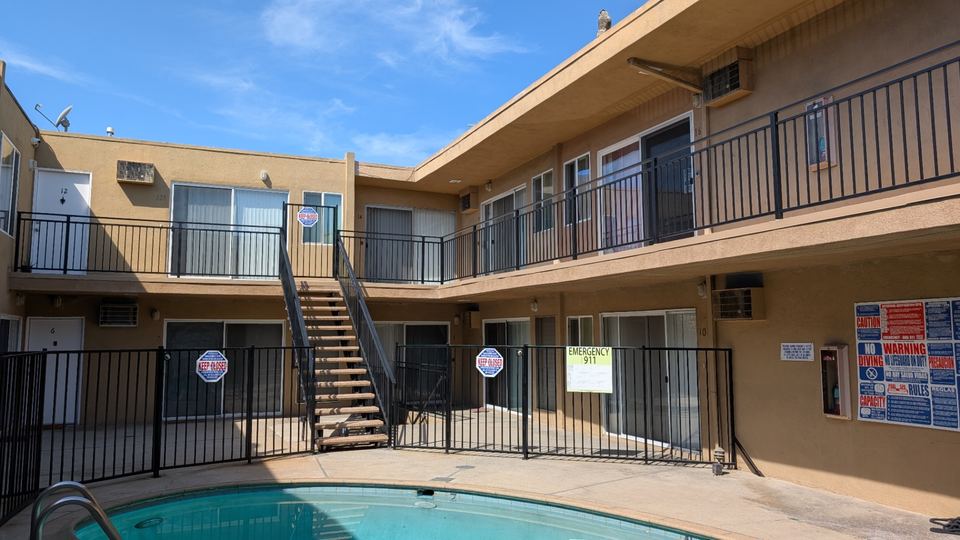
Van Nuys, California — walkway repair and railing replacement - Exterior walkways and bridges
- Guardrails and handrails
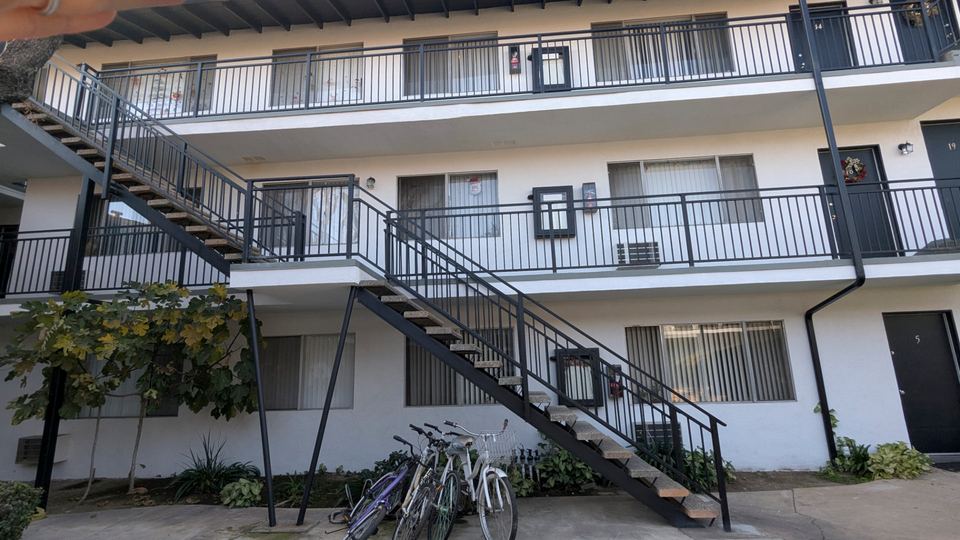
Arcadia, California — exterior stair and landing repair - Stairs and landings
- Staining, movement, deflection, corrosion, decay, and improper alterations
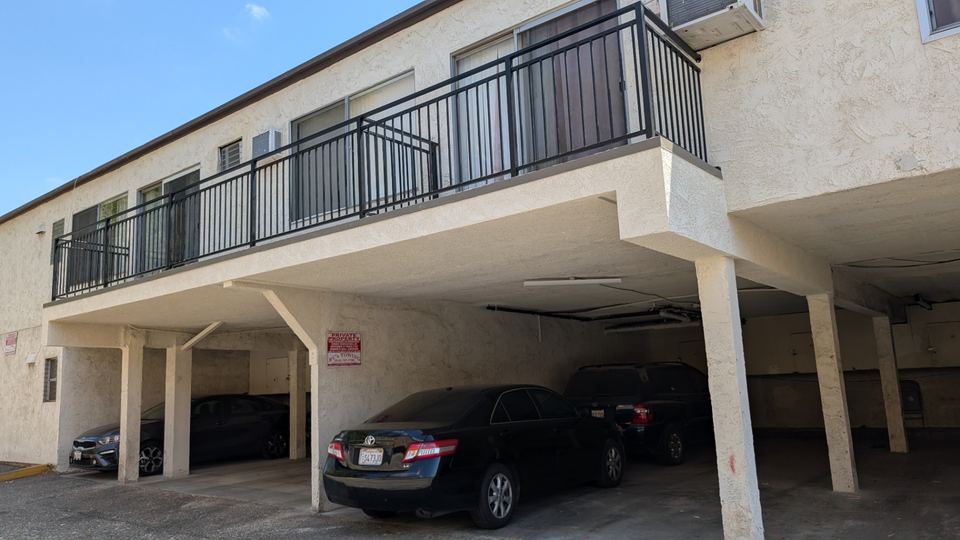
Tarzana, California — balcony structural repair and waterproofing - Balconies and elevated decks
- Joists, ledgers, beams, posts, and connections
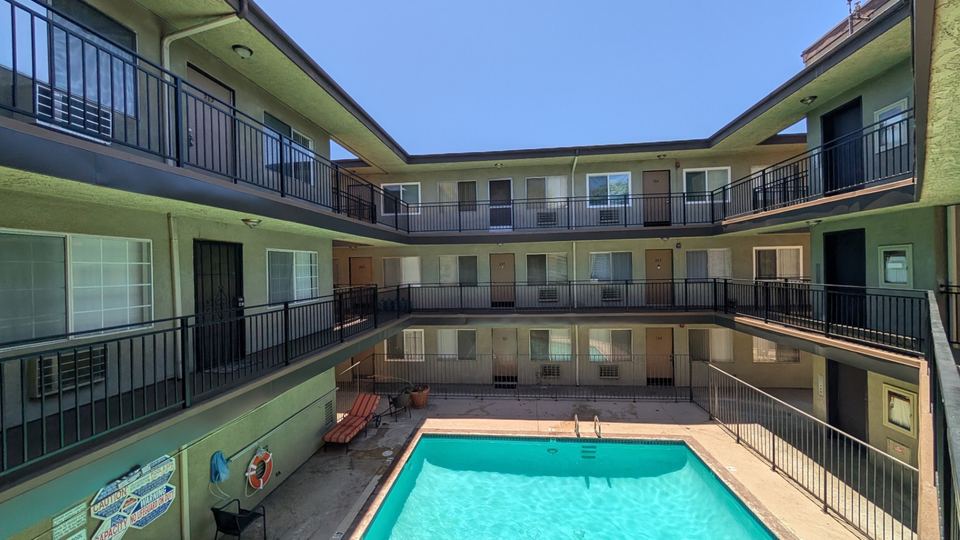
Canoga Park, California — balcony inspection, structural repair, waterproofing - Deck coatings and waterproofing membranes
- Flashing, sealants, edges, and wall transitions
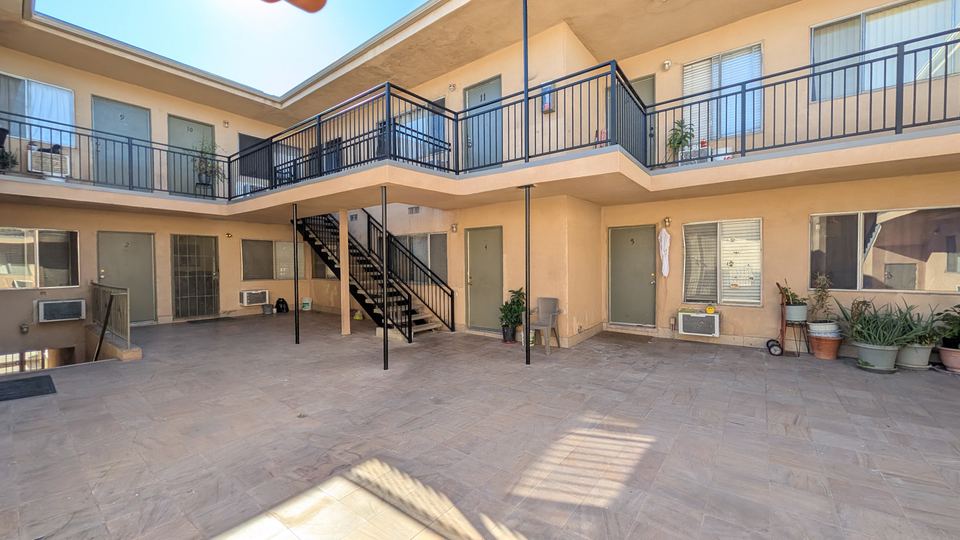
Northridge, California — balcony replacement and new guardrails - Drainage conditions
- Guardrails and handrails


If findings require work, the report remains useful
RetroCal’s inspection service stands on its own. Apartment owners are free to obtain repair proposals from any qualified licensed contractor. When an owner wants one point of coordination, RetroCal can also perform permitted structural repairs, waterproofing, flashing, guardrail replacement, and related project close-out work.
There is no obligation to hire RetroCal for repairs after an inspection.
Relevant RetroCal work near North Hollywood
Each project below is shown with the city where the work was actually performed.

Walkway repair and railing replacement.
Walkway, stair, railing, and waterproofing work.

Apartment walkway repair documented before, during, and after.
View the project fileAlready overdue or holding an LA Housing Department notice?
Send RetroCal the property address, notice date, unit count, and known balcony, stair, or walkway quantities. The team will review the scope and available scheduling options. Detailed guidance for overdue inspections.
North Hollywood inspection questions
- Does RetroCal inspect North Hollywood apartment buildings?
- Yes. RetroCal inspects qualifying apartment properties in North Hollywood, serving the area from its Sherman Oaks office.
- What does E3 mean on a Los Angeles Housing Department notice?
- E3 refers to Exterior Elevated Elements — balconies, walkways, stairs, landings, and similar elevated construction. The Los Angeles requirement is explained on our Los Angeles E3 inspection page.
- Are exterior walkways and stairs inspected separately from balconies?
- Yes. Each element type present at the property is inventoried and sampled on its own, because walkways, stairs, and balconies fail in different ways.
- Are railings and waterproofing part of the inspection?
- Yes. Guardrails, handrails, their attachments, deck coatings, membranes, flashing, and drainage conditions are all part of the evaluation.
- How does RetroCal minimize unnecessary openings?
- Visual evaluation is combined with moisture meters, infrared thermal imaging where conditions allow, and borescopes, so that openings are made only where a concealed condition cannot otherwise be evaluated reliably.
- What information is needed for a North Hollywood inspection proposal?
- The property address, unit count, approximate quantities of balconies, stairs, and walkway length, and any notice or prior report you already have.
- Can RetroCal review a report prepared by another qualified inspector?
- Yes. Send the existing report with the property details and RetroCal can review the findings and discuss next steps.
- Does RetroCal inspect HOA or condominium properties?
- No. RetroCal's inspection service is limited to qualifying apartment properties.
Tell us about your North Hollywood apartment property
Send the property address and basic E3 quantities. A RetroCal specialist will review the information and follow up with a property-specific proposal.
Official resources
RetroCal is not a government agency and does not control agency decisions or local procedures. These links are provided for reference.
- California Health and Safety Code §17973
Official statute text for the apartment inspection requirement.
- Los Angeles Housing Department — E3 Apartments
City of Los Angeles program information for apartment Exterior Elevated Element inspection compliance.
- LADBS Information Bulletin P/BC 2017-144 — Exterior Elevated Elements
LADBS technical bulletin used for repair permitting and construction inspection.
Sources: Health & Safety Code §17973 (SB 721) · LA Housing Dept — E3-Apartments · LADBS
More reading: how inspections work, repairs, licensing, and the full service area.